
Blepharoplasty (Eyelid Surgery)
What is the Procedure?
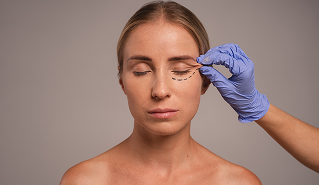
Blepharoplasty is a delicate surgical procedure designed to rejuvenate the appearance of the eyes by removing or repositioning excess fat, muscle, and skin from the upper and/or lower eyelids. Upper blepharoplasty can correct “hooding” of the eyelids that can make one look tired or sad, and in severe cases, can even impair vision. Lower blepharoplasty primarily addresses undereye “bags,” puffiness, and fine wrinkles. The result is a brighter, more rested, and more alert appearance that takes years off the face without changing its fundamental character.


Who is a Good Candidate for this Procedure?
You may be an ideal candidate for blepharoplasty if you
- Have droopy or hooded upper eyelids .
- Have excess skin on the upper eyelids that interferes with your peripheral vision
- Have persistent bags or puffiness under your eyes.
- Appear tired or older than you feel due to the condition of your eyelids.
- Are in good overall health and a non-smoker.
- Have realistic expectations for improvement.
The Consultation Process
- During your consultation, you will be able to point out exactly what concerns you about your eyelids. I will perform a detailed examination of your eyes and the surrounding facial structures, assessing your skin quality, muscle tone, and the amount of excess fat and skin. We will discuss whether you would benefit most from upper eyelid surgery, lower eyelid surgery, or both. I will also assess your vision and tear production to ensure the procedure is safe for you.
Surgical Procedure
- Eyelid surgery is a highly precise procedure, typically performed under local anaesthesia with sedation or general anaesthesia.
- Upper Blepharoplasty: An incision is meticulously placed within the natural crease of the upper eyelid, making it virtually invisible once healed. Through this incision, I remove the predetermined amount of excess skin and protruding fat. The incision is then closed with very fine sutures.
- Lower Blepharoplasty: The approach depends on the primary concern.
- Transconjunctival Approach: If the primary issue is excess fat (bags) with good skin tone, an incision is made on the inside of the lower eyelid. This allows for the removal or repositioning of fat without any visible external scar.
- Subciliary Approach: If there is also excess skin to be removed, an incision is made just below the lower lash line. This allows for the removal of both skin and fat. The scar heals exceptionally well and is camouflaged by the eyelashes.


Recovery and Downtime
Week 1:
Swelling and bruising are expected and will be most prominent in the first few days. Using cold compresses and keeping your head elevated is crucial. You may experience some dryness or irritation. Sutures are typically removed within 5-7 days.
Weeks 1-2:
Most bruising and swelling will have resolved, and you will feel comfortable returning to work and social settings. You should avoid strenuous activities and wearing contact lenses.
1 Month:
You will see a significant improvement, and your results will be quite apparent.
3-6 Months:
All subtle swelling will have subsided, revealing the final, refined result.
Potential Risks and Complications
- Risks are uncommon but can include infection, bleeding, dry eyes, difficulty closing your eyes completely (usually temporary), and visible scarring. The most serious risks, like changes in vision, are extremely rare when the procedure is performed by a qualified plastic surgeon.
Frequently Asked questions (FAQs)
Will I look like a different person?
No. The goal of blepharoplasty is to restore a more youthful and rested version of yourself. You will look refreshed, not different.
How long do the results last?
The results of blepharoplasty are very long-lasting. While the natural ageing process willccontinue, the improvements from the surgery will be visible for many years. Upper eyelidcresults can last 7-10 years, while lower eyelid results are often considered permanent.
Will the surgery affect my vision?
Your vision may be temporarily blurry for a day or two due to ointment and swelling, butcthe procedure itself, when performed correctly, does not affect your eyesight. In fact, manycpatients with severe hooding report improved peripheral vision after surgery.
Take the Next Step
If you are ready to restore a firm, flat abdomen, schedule a consultation at my clinic in Rajahmundry to create a personalized surgical plan